
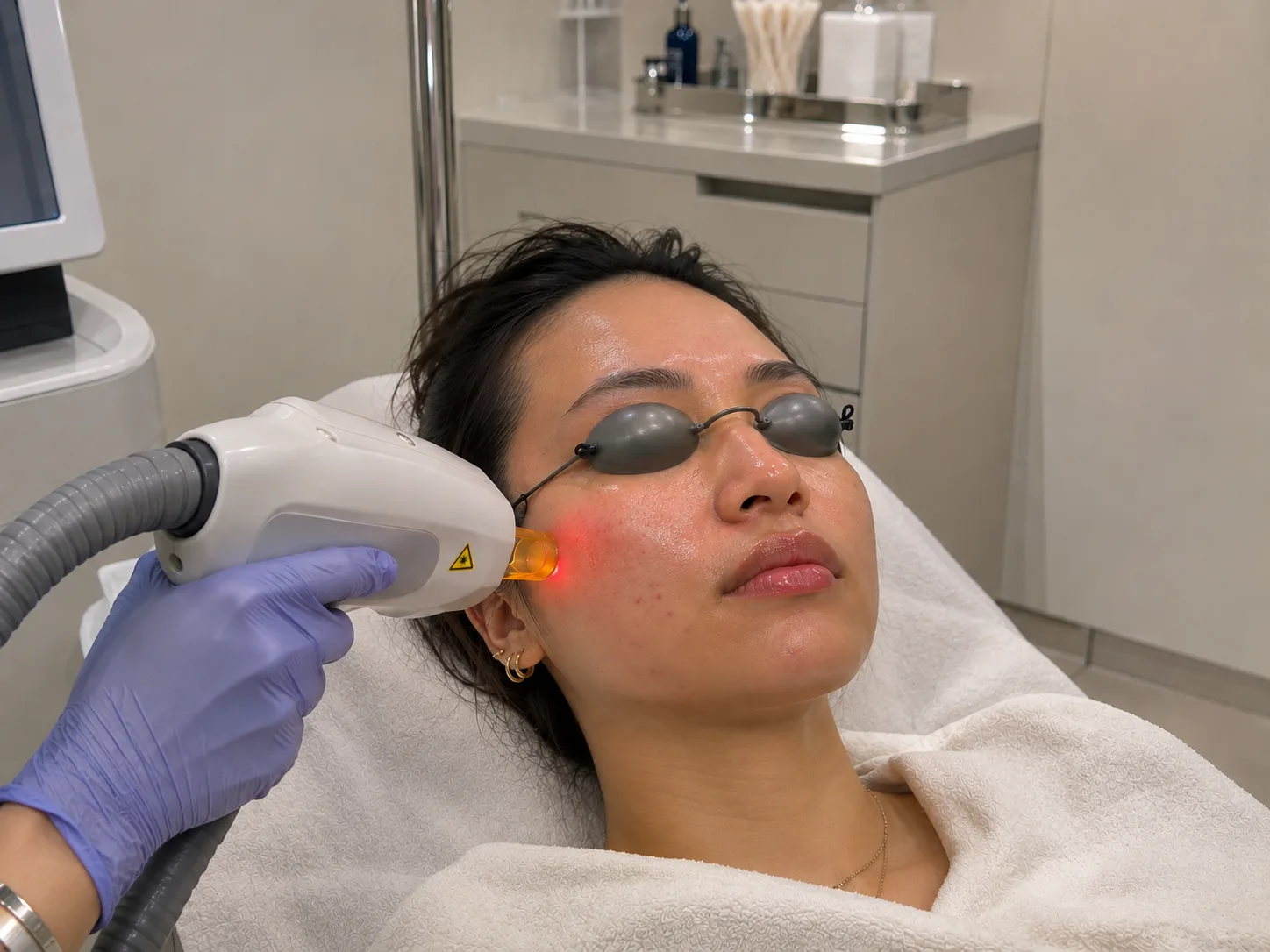
Laser treatments are commonly used in dermatology to address concerns such as redness, pigmentation, visible blood vessels, acne scarring, unwanted hair, and signs of sun damage. While some improvement may be noticeable after a single session, many laser procedures require a series of treatments to achieve optimal results. The number of sessions depends on the skin concern, the technology being used, and the individual’s skin characteristics.
How Laser Treatments Work
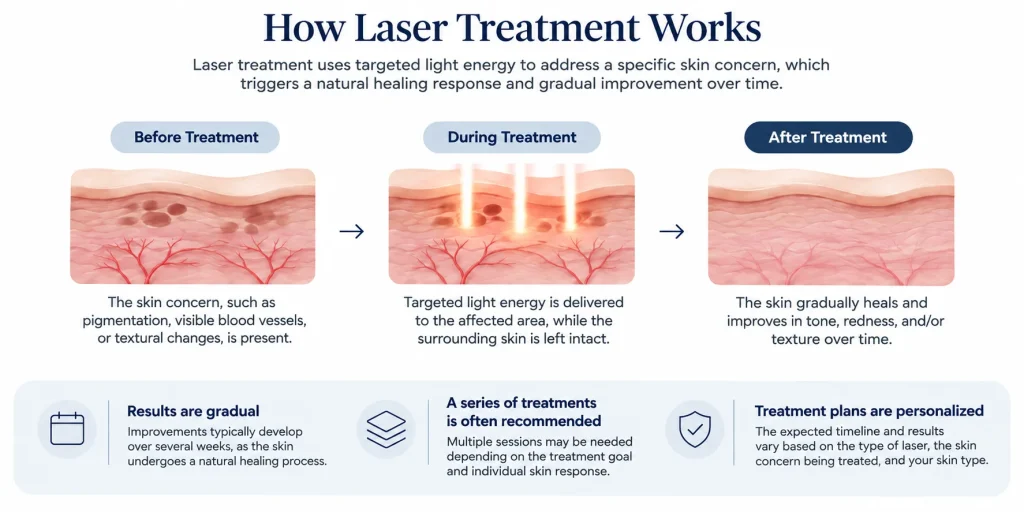
Lasers and light-based devices deliver targeted energy to specific structures within the skin. Depending on the technology, this energy may target pigment, blood vessels, hair follicles, or stimulate collagen production. However, the response is not always immediate. Some treatments rely on the body’s natural processes to gradually break down targeted pigment, remove treated hair, or produce new collagen.
Why Are Multiple Sessions Necessary?
Several factors influence the need for repeated treatments:
- The skin responds gradually: Collagen remodelling and tissue repair occur over time. Treatments designed to improve skin texture, fine lines, or acne scars may require multiple sessions to produce noticeable changes.
- Different growth cycles: Laser hair removal is most effective when hair follicles are in their active growth phase. Since not all hairs grow simultaneously, multiple sessions are needed to target follicles at different stages.
- Gradual reduction of pigmentation and redness: Pigmented lesions and visible blood vessels may respond progressively. Multiple sessions can help achieve more consistent improvement while allowing the skin to recover between treatments.
- Treatment intensity and safety: Using controlled energy levels across several sessions may help reduce the risk of irritation, burns, and unwanted pigmentation changes compared with attempting more aggressive treatment in one session.
How Many Treatments Will You Need?
The recommended number and spacing of sessions vary depending on the device, treatment area, skin type, and severity of the concern. Some patients may benefit from a short series of treatments, while others require additional sessions or periodic maintenance. Following recommended intervals and post-treatment instructions is important for supporting recovery and achieving safe, consistent results.