
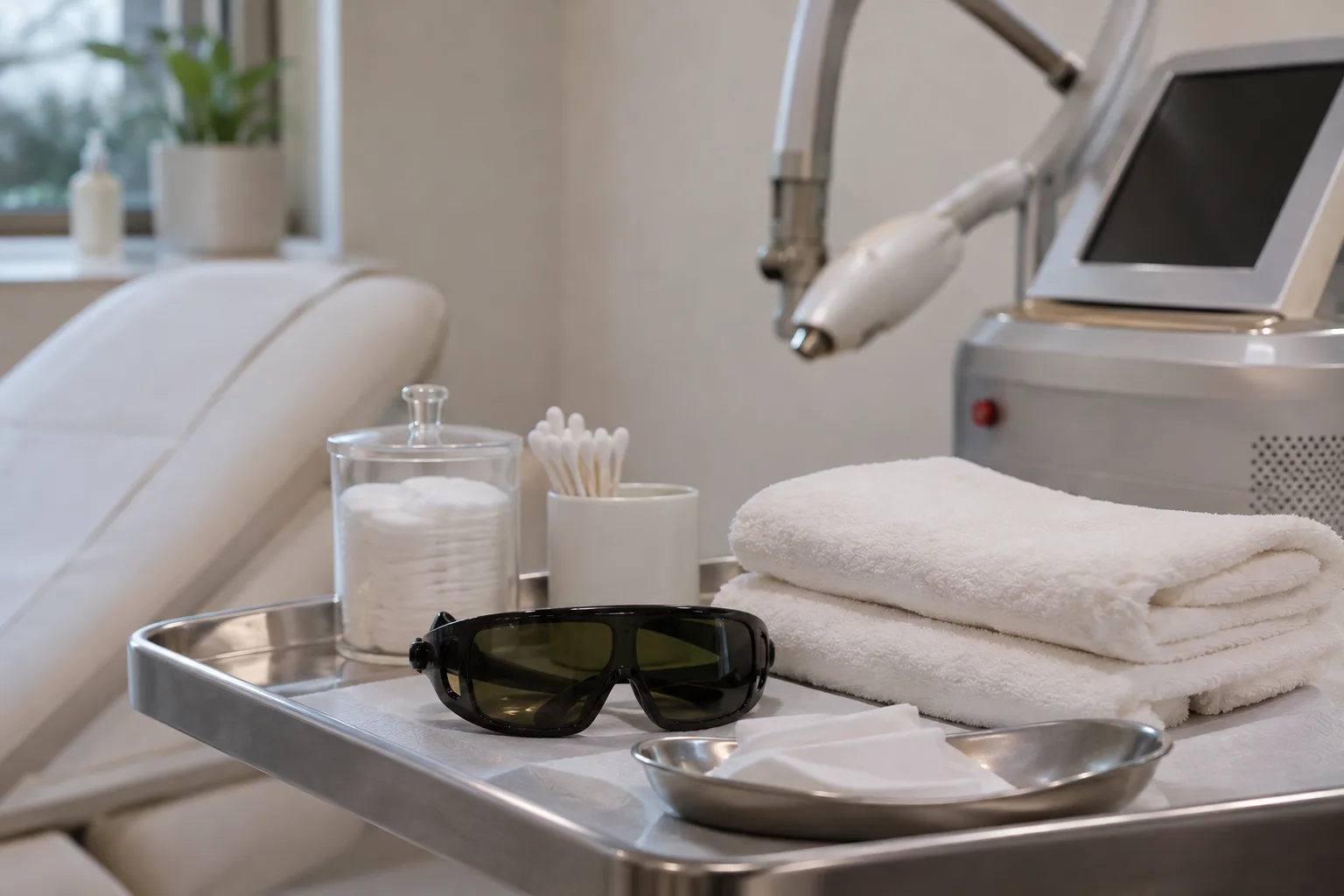
Laser treatments can improve a range of skin concerns, including pigmentation, redness, unwanted hair, acne scarring, and signs of sun damage. However, proper preparation and aftercare are essential for reducing the risk of complications and supporting recovery. Although instructions vary depending on the laser technology and treatment area, several precautions apply to many procedures.
What to Avoid Before Laser Treatment
Avoid sun exposure and tanning. Recent sun exposure, tanning beds, and self-tanning products can increase skin pigmentation and sensitivity. Treating recently tanned skin may increase the risk of burns, blistering, and post-inflammatory hyperpigmentation (dark spots that develop after inflammation). Use broad-spectrum SPF 30 or higher and follow your clinic’s recommendations about sun avoidance before treatment.
Pause irritating skincare ingredients when advised. Retinoids, exfoliating acids (such as glycolic and salicylic acid), and other potentially irritating products may need to be temporarily discontinued. These ingredients can increase skin sensitivity and irritation. The appropriate timing depends on the product and laser being used.
Avoid waxing or plucking before hair removal. If you are receiving laser hair removal, avoid methods that remove the hair follicle, such as waxing, threading, or plucking. The laser needs pigment within the follicle to effectively target it. Shaving is generally permitted and may be recommended.
What to Avoid After Laser Treatment
Avoid direct sun exposure. Treated skin may be more vulnerable to ultraviolet (UV) damage. Protect the area with broad-spectrum SPF 30 or higher, protective clothing, and shade. Follow your provider’s instructions on when to resume sunscreen after treatment.
Avoid excessive heat and strenuous activity initially. Hot showers, saunas, steam rooms, and intense exercise may worsen temporary redness, swelling, or irritation. Your provider can advise when these activities can safely resume.
Avoid picking, scrubbing, or exfoliating. Some treatments cause temporary redness, swelling, crusting, or darkening of pigmented spots. Allow the skin to heal naturally and avoid picking or peeling treated areas, which can increase the risk of scarring and pigmentation changes.
Why Following Aftercare Matters
Laser treatments create controlled interactions with targeted skin structures, triggering processes such as pigment clearance, hair follicle damage, or collagen remodelling. Appropriate preparation and aftercare help protect the surrounding skin while these processes occur.
Contact your clinic if you develop severe or worsening pain, blistering, or unexpected skin changes.