
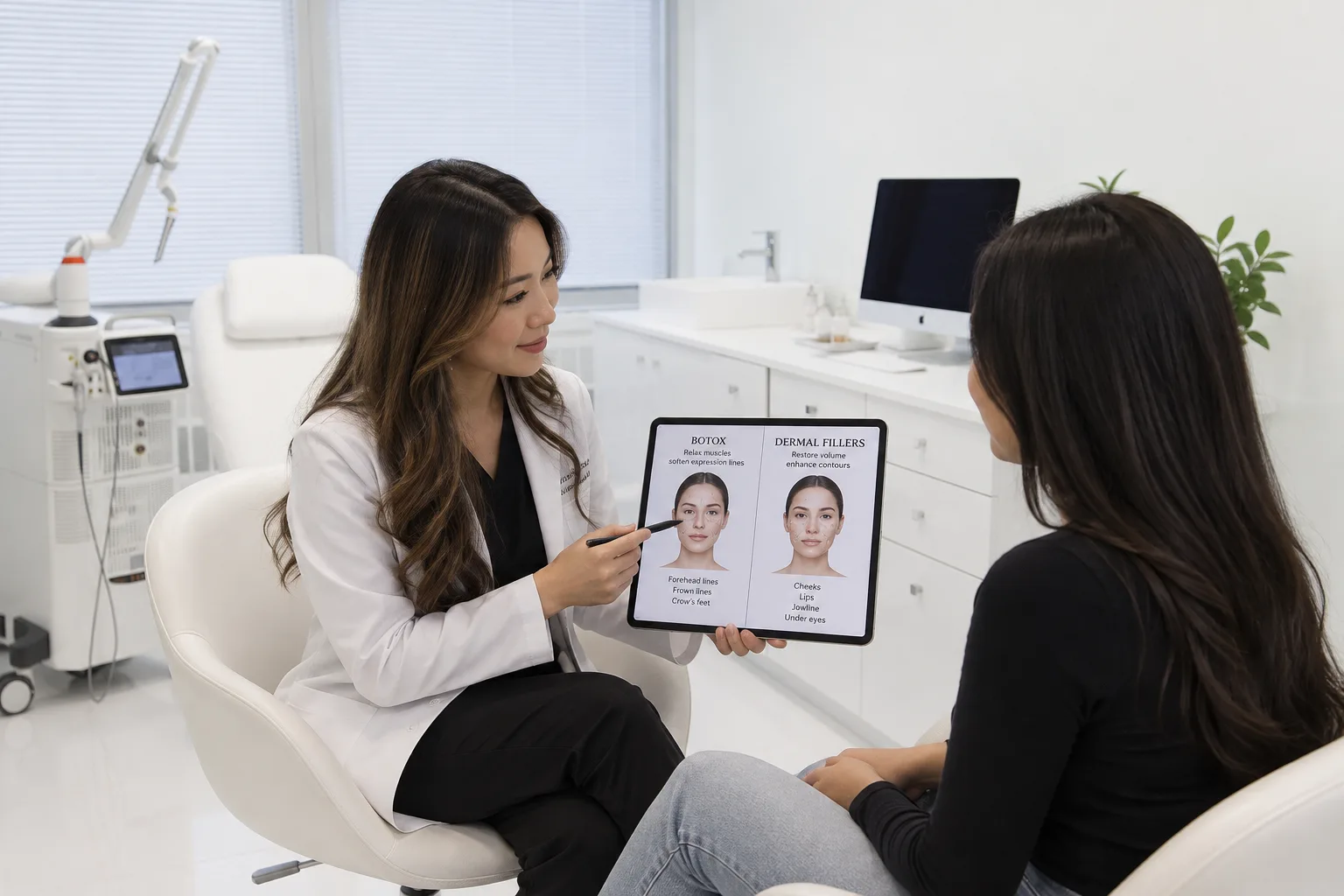
Botox and dermal fillers are two popular injectable treatments that are often confused with one another. Although both can help soften signs of aging and enhance facial appearance, they work in different ways and address different concerns. Understanding how each treatment works can help you make a more informed decision about which option may be best suited to your goals.
What Is Botox?
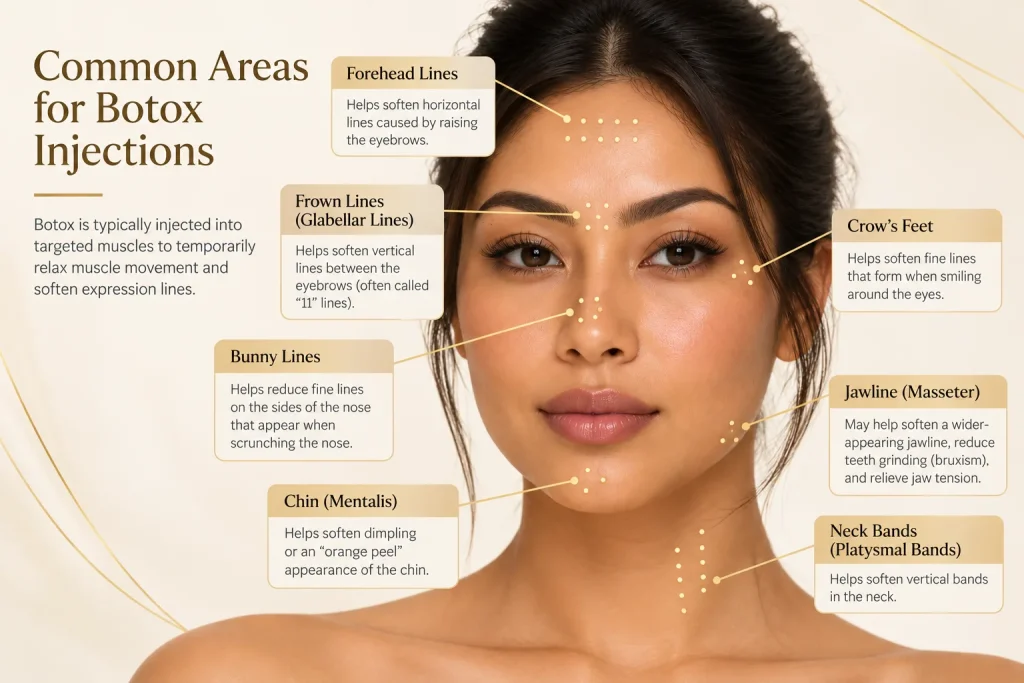
Botox is a neuromodulator that temporarily relaxes targeted facial muscles. By reducing repeated muscle movements, it helps soften dynamic wrinkles which are lines that appear when you frown, raise your eyebrows, or smile.
Common treatment areas include forehead lines, frown lines between the eyebrows, and crow’s feet around the eyes. Results typically begin to appear within a few days, with effects lasting around three to four months.
What Are Dermal Fillers?
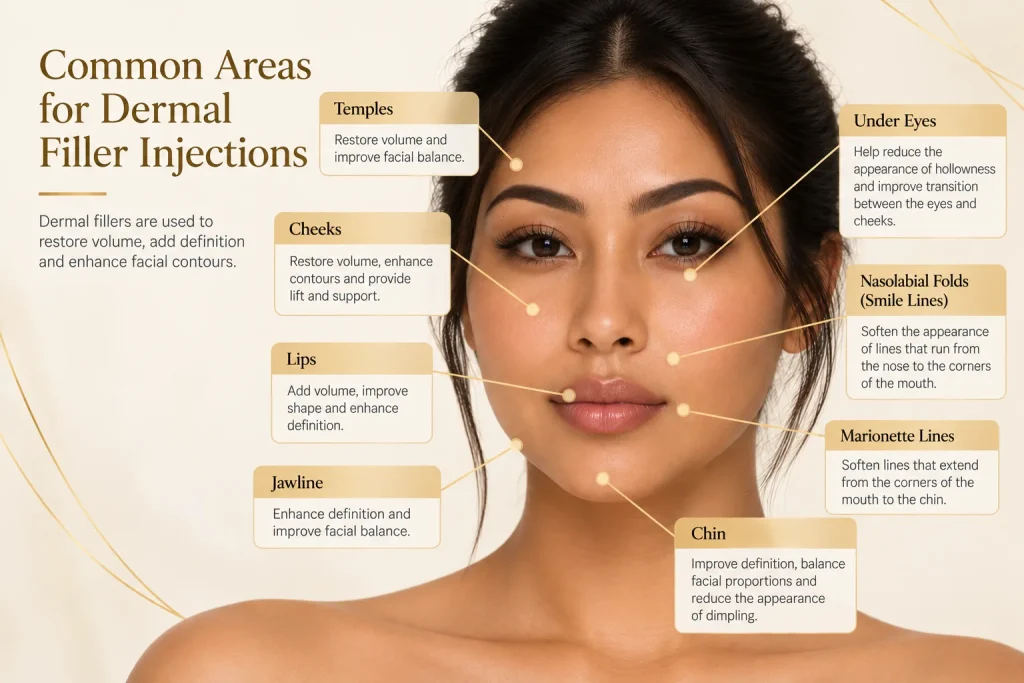
Dermal fillers are injectable gels that restore volume, add fullness, and soften certain facial lines. Many fillers contain hyaluronic acid, a substance naturally found in the body that helps retain moisture.
Fillers may be used to enhance the lips, restore fullness to the cheeks, soften deeper folds, or improve the appearance of hollow areas under the eyes. Results are often visible immediately, although the duration depends on the product and treatment area.
Which Treatment Is Right for You?
The key difference is that Botox targets muscle movement, while dermal fillers restore or add volume. Because they address different concerns, one is not necessarily a substitute for the other. Depending on a person’s goals and clinical assessment, a treatment plan may include one or both.
Both treatments carry potential risks and should be performed by a qualified medical professional with appropriate training and experience. Dermal fillers can rarely cause serious vascular complications if filler enters or blocks a blood vessel. These complications may lead to tissue injury and, in very rare cases, vision problems, including vision loss. Seek immediate medical attention for unusual or worsening pain, skin blanching or discoloration, or any visual symptoms after filler treatment.
A consultation at North York Dermatology Clinic can help assess your concerns, discuss expected results and risks, and determine which option may be appropriate for you.