
What Does Rosacea Look Like on Different Skin Tones?
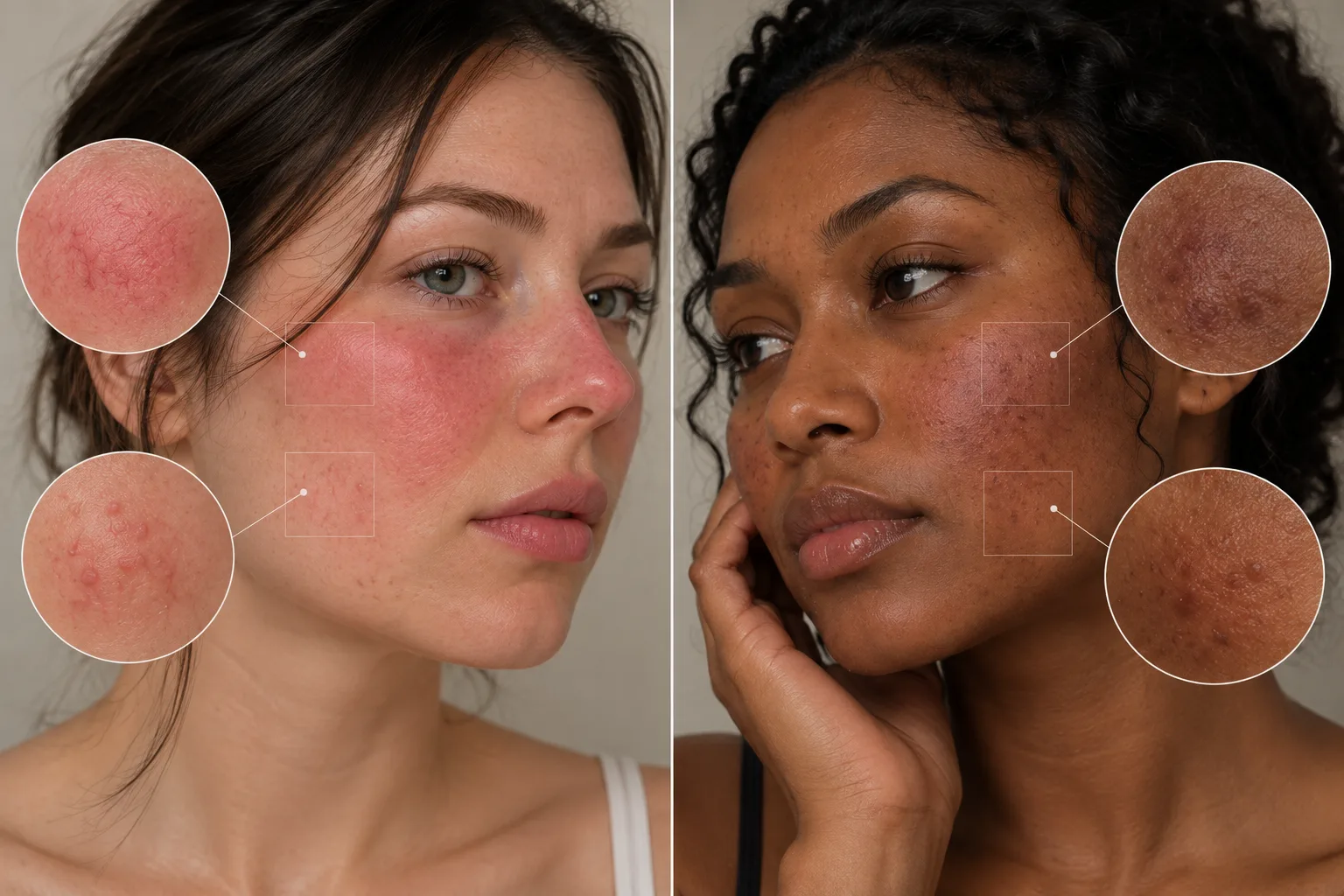
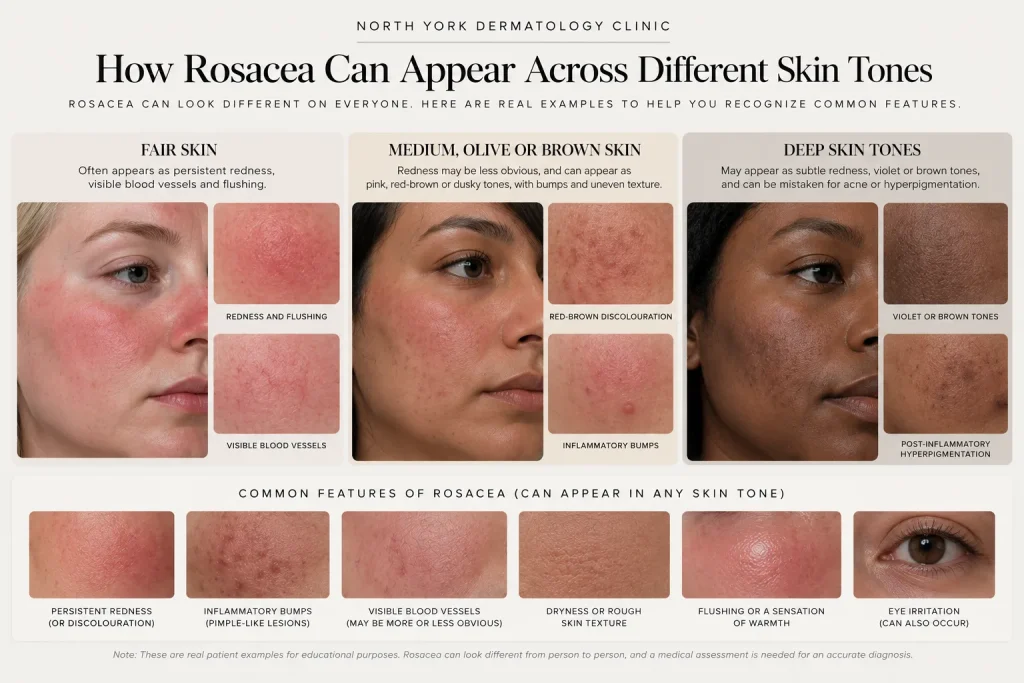
- Fair skin: Rosacea often appears as persistent redness across the cheeks, nose, forehead, and chin. Small visible blood vessels, acne-like bumps, and flushing may also occur.
- Medium, olive, and brown skin: Redness may be less obvious or appear pink, red-brown, or dusky. Instead, patients may notice facial warmth, sensitivity, stinging, or acne-like bumps that do not improve with typical acne treatments.
- Deep skin tones: Colour changes can be subtle and may appear as violet, brown, or darker patches rather than obvious redness. Skin may also feel hot, irritated, or unusually sensitive. In some cases, inflammation can contribute to lingering dark marks known as post-inflammatory hyperpigmentation.
Why Rosacea Can Be Difficult to Recognize
Rosacea can resemble acne, eczema, and other inflammatory skin conditions, making it difficult to recognize. Unlike typical acne, rosacea does not usually cause blackheads and may be accompanied by facial burning, flushing, or persistent sensitivity. Its appearance can also vary across skin tones. In darker skin, redness may be less noticeable, making symptoms such as persistent warmth, sensitivity, and recurring bumps particularly important clues.
Rosacea can also affect the eyes, a condition known as ocular rosacea. Patients may experience red or irritated eyes, dryness, or a gritty sensation, as though something is in the eye. Persistent eye symptoms should be assessed by a healthcare professional, while eye pain, light sensitivity, or changes in vision warrant prompt medical attention. Because rosacea can resemble other conditions and may present differently across skin tones, a clinical assessment is important to establish an accurate diagnosis.
When Should You See a Dermatologist?
If you experience recurring facial flushing, persistent skin irritation, or unexplained bumps, book a dermatology appointment to determine whether rosacea or another skin condition may be responsible. Persistent eye redness, irritation, or a gritty sensation should also be medically assessed, as these may be signs of ocular rosacea. Seek urgent medical care if you develop eye pain, significant light sensitivity, or new changes in vision, as these symptoms may indicate a more serious eye condition requiring prompt evaluation.
Concerned about rosacea? Contact North York Dermatology Clinic to book a dermatology appointment for assessment and personalized treatment recommendations. Early evaluation can help you better understand your symptoms and determine the most appropriate treatment for your skin.