
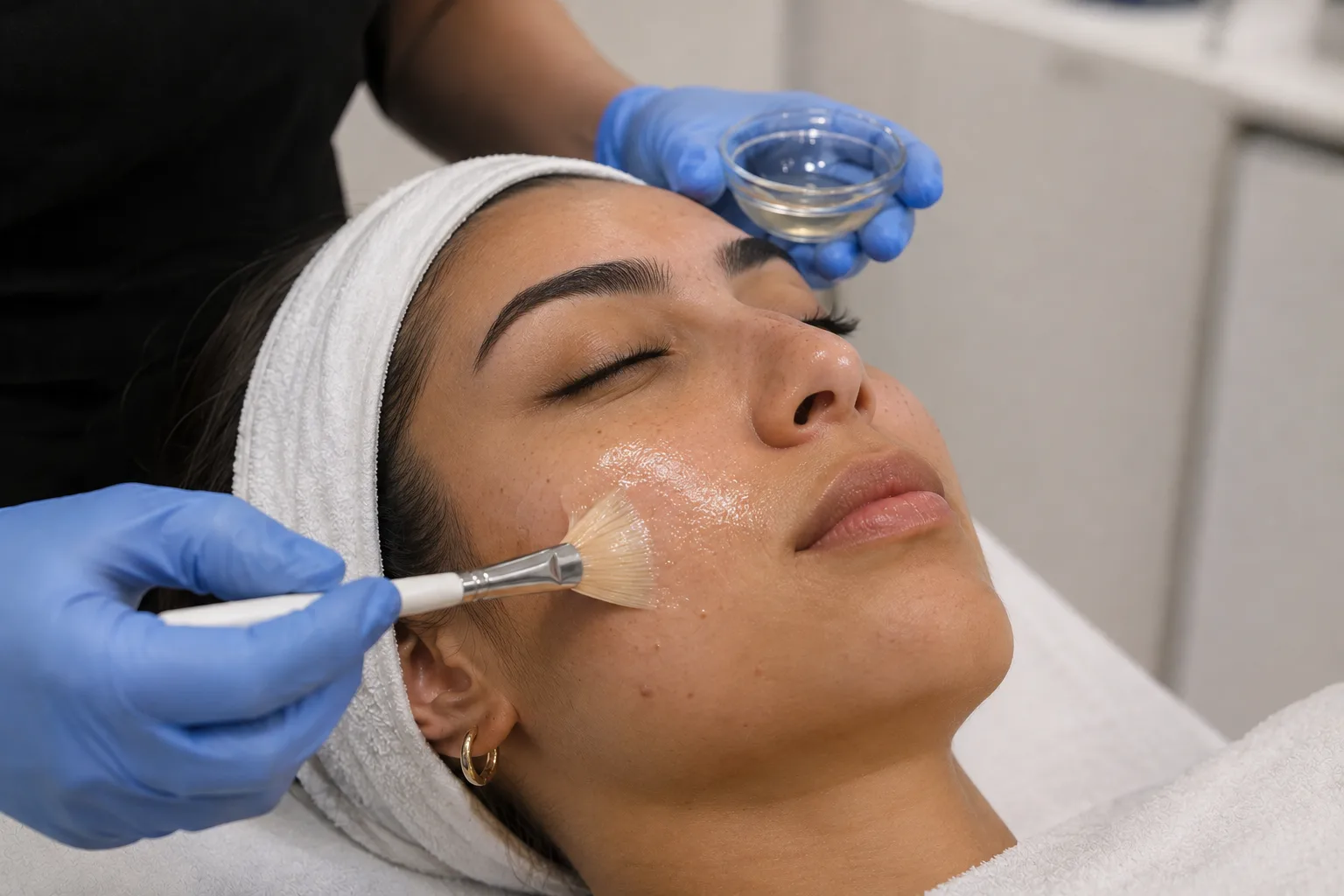
Chemical peels are dermatological treatments designed to improve skin texture, tone, and overall appearance by removing controlled layers of damaged skin. They use specific chemical solutions to exfoliate the skin, encourage cell turnover, and, depending on the peel’s depth, stimulate collagen production. Chemical peels can help address concerns such as acne, uneven pigmentation, fine lines, and sun damage. However, the appropriate treatment depends on your skin type, concerns, and tolerance for downtime.
Understanding the Different Types of Chemical Peels
Chemical peels are generally classified as superficial, medium, or deep, based on how far they penetrate the skin.
Superficial peels target the outermost layer of the skin (epidermis). Common ingredients include alpha-hydroxy acids (AHAs), such as glycolic and lactic acid, and beta-hydroxy acids (BHAs), such as salicylic acid. These peels may help improve mild acne, clogged pores, dullness, and uneven skin tone. They typically involve minimal downtime and may be performed as a series of treatments.
Medium-depth peels penetrate further into the epidermis and upper dermis. Trichloroacetic acid (TCA) is commonly used for this purpose. These treatments may help address more noticeable sun damage, pigmentation, fine lines, and certain textural irregularities. Recovery generally involves more redness, peeling, and downtime than superficial peels.
Deep peels reach deeper layers of the skin and may be used for more significant sun damage, wrinkles, and certain scars. Phenol is one example of a deep-peel agent. Deep phenol peels carry significant systemic risks, including potential cardiac complications such as abnormal heart rhythms. They require specialized medical supervision, including appropriate cardiac monitoring during and after the procedure. These procedures also involve longer recovery periods and a greater risk of complications than superficial or medium-depth peels.
Which Chemical Peel Is Right for You?
The best chemical peel depends on your skin concerns, skin tone, medical history, and treatment goals. Patients with darker skin tones may have a greater risk of post-inflammatory hyperpigmentation following certain peels, making appropriate peel selection and treatment depth particularly important.
A dermatologist can assess your skin and recommend an appropriate treatment depth and formulation. Proper preparation, sun protection, and post-treatment skincare are essential for reducing complications and supporting recovery.
Chemical peels are not one-size-fits-all treatments. A personalized approach helps ensure that the selected peel addresses your concerns while considering your skin’s safety.